

Introduction
Few questions trouble believers and skeptics alike more than this: If God is loving, powerful, and good, why does He allow suffering? This question isn’t just theoretical. It’s deeply personal. It arises from graveside tears, hospital waiting rooms, broken homes, and silent prayers that seem to go unanswered.
In an age of war, global pandemics, injustice, and personal tragedy, this question resurfaces with intensity. In fact, “Why does God allow suffering?” remains one of the most searched Christian questions online, indicating both the spiritual urgency and emotional weight it carries. According to a 2025 report by Relevant Magazine, this question ranks among the top faith-related Google queries across the globe.
So how do we begin to answer it biblically and compassionately?
A Broken World
First, Scripture teaches that we live in a fallen world. Romans 8:22 reminds us, “We know that the whole creation has been groaning as in the pains of childbirth right up to the present time.” Suffering entered the world through sin. Genesis 3 reveals that humanity’s rebellion against God disrupted not only our relationship with Him but also the very fabric of creation. Disease, death, and disaster were never part of God’s original design.
Consider a mother who has lost her child to cancer. She prayed, fasted, gathered her church community, and believed in healing. Yet, after months of pain, her child passed away. In moments like these, the question is not just “Why?” but “Where was God?” The answer Scripture gives is not simplistic; it is relational. God was present in every hospital room, in every tear, in every moment of silence. The groaning of creation is matched by the groaning of the Spirit (Romans 8:26), who intercedes when we have no words.
Yet the existence of suffering doesn’t mean God is absent. It means the world is not as it should be. This longing for restoration is not proof against God, but rather points us back to Him as the one who will ultimately make all things new (Revelation 21:4).
God’s Sovereignty in Suffering
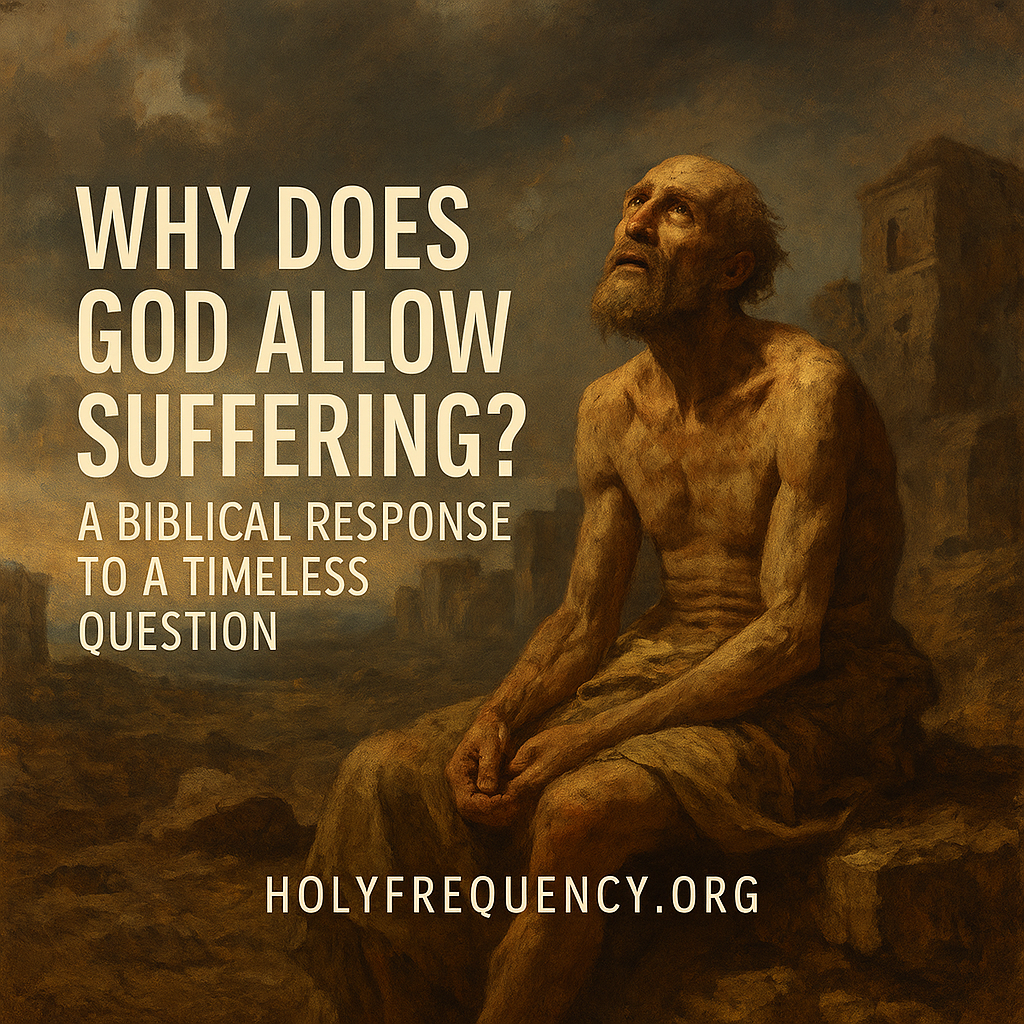
The Bible never denies the reality of suffering. In fact, it includes it in almost every major narrative. Job loses everything. Joseph is betrayed and imprisoned. David runs for his life. Paul is beaten, shipwrecked, and rejected.
Today, we see suffering in the form of parents burying their children due to chronic illnesses, spouses caring for partners with dementia, or individuals watching loved ones fade slowly under terminal disease. In each case, the emotional toll is unbearable. Yet the biblical witness remains: God is not only aware of our suffering, He is present in it.
In Job 42, after deep agony and questioning, Job discovers that God is sovereign, just, and still worthy of trust. Romans 8:28 declares that “in all things God works for the good of those who love him.” This includes suffering. God doesn’t waste our pain; He works through it.
Suffering often refines faith, deepens character, and exposes our dependence on God. The psalmist says, “It was good for me to be afflicted so that I might learn your decrees” (Psalm 119:71). This doesn’t mean we enjoy pain, but that we find purpose in it when we trust God with it.
The Cross: God’s Ultimate Answer
The clearest evidence that God is not indifferent to suffering is the cross. Christianity doesn’t offer a God who watches pain from a distance. We follow a Savior who entered into our suffering. Isaiah 53:3 describes Jesus as “a man of suffering, familiar with pain.”
At the cross, God took on human suffering, bore our sin, and opened a path to eternal life. The resurrection assures us that suffering and death do not have the final word. As theologian N.T. Wright puts it, “The resurrection is not just a consolation—it is restoration. We get it all back—the loved ones, the world, the joys—everything that is lost.”
The cross reframes suffering not as defeat, but as the doorway to eternal victory. Jesus’ death reminds us that God does not ignore our pain—He absorbs it.
Hope That Endures
One reason the question of suffering weighs so heavily is that we desire hope, not just explanations. Christianity offers that hope. Paul writes in 2 Corinthians 4:17, “For our light and momentary troubles are achieving for us an eternal glory that far outweighs them all.” This is not a minimization of pain, but it is a reframing of it in the light of eternity. Suffering is real, but it is not forever. God promises restoration, justice, and healing.
In Revelation 21:4, we read, “He will wipe every tear from their eyes. There will be no more death or mourning or crying or pain.” This isn’t a poetic exaggeration. It’s a concrete promise. One day, the pain we endure will be swallowed up by perfect peace. For the father who stood by his daughter’s hospital bed, for the widow who buries her husband of forty years, for the child who cries in secret over bullying or abuse; these are the very people God promises to comfort, restore, and redeem.
Final Thoughts
We may never have all the answers to why God allows specific moments of suffering, but Scripture gives us enough to respond with trust, not despair. God is not distant. He sees. He understands. He enters in. Suffering points us to our need for redemption and reminds us that this world is not our final home. As we wrestle with pain, we cling not just to answers—but to the God who suffered with us and for us.
Sources
Relevant Magazine. “What the Most Googled Faith Questions in 2024 Say About Our Spiritual State.” https://relevantmagazine.com
N.T. Wright, Surprised by Hope. HarperOne, 2008.
The Holy Bible, New International Version.